Overview
The purpose of this document is to guide the user in deploying 6WIND HNA in a BGP EVPN use-case.
In this scenario, the HNA, running as a Kubernetes pod, will extend the Network Fabric up to Kubernetes nodes, and will provide a network connectivity to CNF containers or VM with good performance and flexibility, avoiding the use of SR-IOV.
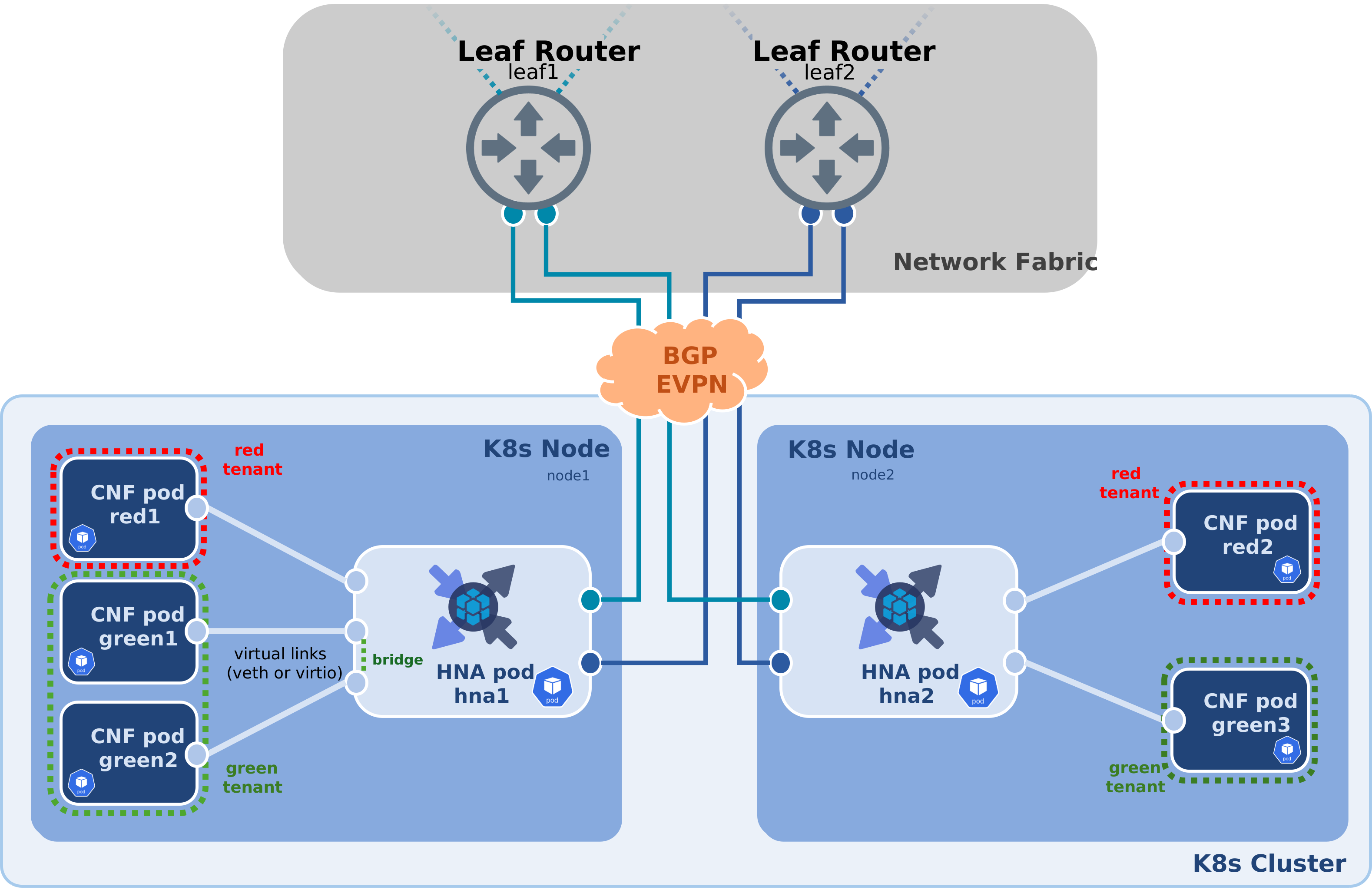
Overview of the HNA EVPN Scenario.
This deployment guide shows how to connect at Ethernet level and isolate each CNF of a specific tenant. This is implemented by an Ethernet bridge for traffic that is local to a Kubernetes node, or through a VXLAN tunnel for inter-nodes traffic.
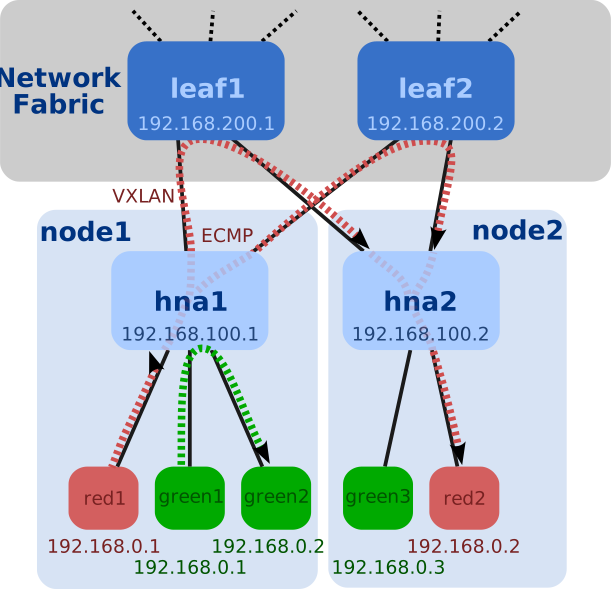
Example of network traffic in the HNA EVPN Scenario.
The tenant properties are described in CRDs:
the list of networks for this tenant
the stateful filtering rules to be applied
the networks from another tenant that are reachable from this tenant
The network connection between the HNA and the CNF is either a
veth interface (for CNF Pods using the Linux network stack) or a
virtio-user if the CNF supports it (Virtual Service Router for instance).