IKE Configuration Overview
Enabling IKE
IKE is enabled per VRF as follows:
vsr running config# / vrf main ike
Next, a VPN must be defined to specify the security parameters and policies to apply to the traffic, as well as authentication credentials for the IKE negotiation. To simplify the configuration of VPNs, VPN templates are used.
Policy templates
The number of parameters for IKE is very high and it would be painful to repeat all of them for each VPN configuration. Therefore a template system is available to ease the configuration:
several VPNs can share the same settings by referring to the same template,
each parameter present in a template can be overridden by the VPN.
The IKE protocol consists of two phases:
The first phase performs mutual authentication of two IKE peers and establishes an IKE Security Association (IKE SA), i.e. a secure communication channel between the two parties.
The second phase enables to create or update pairs of ESP or AH SAs. Each pair of ESP or AH SAs is called a CHILD SA.
Note
The IKE peers establish shared secret keys via key exchanges. In this
document, the method used for the key exchange will be designated by the
umbrella term “Diffie-Hellman group” for all types of key exchange
mechanisms: historic modular exponentiation groups (such as modp2048),
modern elliptic curve groups (such as ecp521) or post quantum key exchange
mechanisms (such as ml-kem-512).
IKE policy templates
IKE policy templates enable to define a model of IKE SA parameters. VPNs inherit their IKE SA parameters from such template, then can override each of them.
Create an IKE policy template:
vsr running config# / vrf main ike ike-policy-template iketemp1
The IKE policy template is initialized with various default values:
vsr> show config / vrf main ike ike-policy-template iketemp1
ike-policy-template iketemp1
    local-auth-method pre-shared-key
    remote-auth-method pre-shared-key
    keying-tries 1
    unique-sa no
    reauth-time 0s
    rekey-time 4h
    dpd-delay 0s
    aggressive false
    udp-encap false
    mobike false
    revocation relaxed
    ocsp reply
    require-ppk false
    ..
One or more IKE cryptographic algorithm proposals must then be defined in the
ike-policy-template, or directly in the VPN ike-policy:
Each IKE proposal must contain either:
a list of encryption algorithms (
enc-alg).a list of authentication algorithms (
auth-alg).a list of Diffie-Hellman groups (
dh-group) for key exchanges.optionally a list of pseudo-random function algorithms (
prf-alg). If noprf-algis provided, then the proposed list of pseudo-random functions will be the same as authentication algorithms.
vsr running config# / vrf main ike ike-policy-template iketemp1 ike-proposal 1 enc-alg aes128-cbc
vsr running config#! / vrf main ike ike-policy-template iketemp1 ike-proposal 1 auth-alg hmac-sha512
vsr running config#! / vrf main ike ike-policy-template iketemp1 ike-proposal 1 dh-group modp2048
vsr running config# / vrf main ike ike-policy-template iketemp1 ike-proposal 1 prf-alg aes-cmac
Or:
a list of combined mode algorithms (
aead-alg), which provide both encryption and authentication.a list of Diffie-Hellman groups (
dh-group) for key exchanges.a list of pseudo-random function algorithms (
prf-alg) for generating random numbers.
vsr running config# / vrf main ike ike-policy-template iketemp1 ike-proposal 2 aead-alg aes256-gcm-128
vsr running config#! / vrf main ike ike-policy-template iketemp1 ike-proposal 2 dh-group ecp256
vsr running config#! / vrf main ike ike-policy-template iketemp1 ike-proposal 2 prf-alg hmac-sha512
Optionally, a list of up to 7 additional key exchanges may be specified, each
listing one or more Diffie-Hellman groups (dh-group), as defined in
RFC 9370.
vsr running config# / vrf main ike ike-policy-template iketemp1 ike-proposal 1 additional-key-exchange 1 dh-group ml-kem-512
As supported by the IKE protocol, the IKE daemon may submit several IKE proposals in a negotiation, and (for IKEv2 only), each proposal may itself contain several algorithms of the same type (for example several encryption algorithms).
vsr running config# / vrf main ike ike-policy-template iketemp1 ike-proposal 3 aead-alg aes256-gcm-128
vsr running config#! / vrf main ike ike-policy-template iketemp1 ike-proposal 3 aead-alg aes192-gcm-128
vsr running config#! / vrf main ike ike-policy-template iketemp1 ike-proposal 3 dh-group curve25519
vsr running config#! / vrf main ike ike-policy-template iketemp1 ike-proposal 3 dh-group ecp521
vsr running config#! / vrf main ike ike-policy-template iketemp1 ike-proposal 3 dh-group ecp256
vsr running config#! / vrf main ike ike-policy-template iketemp1 ike-proposal 3 prf-alg hmac-sha512
vsr running config# / vrf main ike ike-policy-template iketemp1 ike-proposal 3 prf-alg hmac-sha256
vsr running config# / vrf main ike ike-policy-template iketemp1 ike-proposal 3 additional-key-exchange 1 dh-group ml-kem-1024
vsr running config# / vrf main ike ike-policy-template iketemp1 ike-proposal 3 additional-key-exchange 1 dh-group ml-kem-768
vsr running config# / vrf main ike ike-policy-template iketemp1 ike-proposal 3 additional-key-exchange 2 dh-group curve448
vsr running config# / vrf main ike ike-policy-template iketemp1 ike-proposal 3 additional-key-exchange 2 dh-group none
All other parameters of an ike-policy-template have a default value. Each
parameter (including ike-proposal) may be overridden by the VPN, for example
the authentication method.
IPsec policy templates
IPsec policy templates enable to define a model of CHILD SA parameters. VPNs inherit their IPsec SA parameters from such template, then can override each of them.
Create an IPsec policy template:
vsr running config# / vrf main ike ipsec-policy-template ipsectemp1
The IPsec policy template is initialized with various default values:
vsr> show config / vrf main ike ipsec-policy-template ipsectemp1
ipsec-policy-template ipsectemp1
    start-action trap
    close-action trap
    dpd-action restart
    replay-window 32
    rekey-time 1h
    inactivity 0
    rekey-bytes 0
    rekey-packets 0
    encap-copy-dscp true
    decap-copy-dscp false
    encap-copy-df true
    ..
One or more ESP and AH cryptographic algorithm proposals may then be defined
in the ipsec-policy-template, or directly in the VPN ipsec-policy.
Each ESP proposal must contain either:
a list of encryption algorithms (
enc-alg).a list of authentication algorithms (
auth-alg).
vsr running config# / vrf main ike ipsec-policy-template ipsectemp1 esp-proposal 1 enc-alg aes128-cbc
vsr running config#! / vrf main ike ipsec-policy-template ipsectemp1 esp-proposal 1 auth-alg hmac-sha256
Or:
a list of combined mode algorithms (
aead-alg), which provide both encryption and authentication.
vsr running config# / vrf main ike ipsec-policy-template ipsectemp1 esp-proposal 2 aead-alg aes256-gcm-128
Each AH proposal must contain:
a list of authentication algorithms (
auth-alg).
vsr running config# / vrf main ike ipsec-policy-template ipsectemp1 ah-proposal 1 auth-alg hmac-sha512
Each ESP and AH proposal may optionally activate Perfect Forward Secrecy
(PFS) by specifying a list of Diffie-Hellman groups. This will trigger a
key exchange to generate CHILD SA keys. If no dh-group is specified, CHILD
SA keys will be derived from former keys.
vsr running config# / vrf main ike ipsec-policy-template ipsectemp1 esp-proposal 1 dh-group ecp256
Optionally a list of up to 7 additional key exchanges may be specified, each
listing one or more Diffie-Hellman groups (dh-group), as defined in
RFC 9370.
vsr running config# / vrf main ike ipsec-policy-template ipsectemp1 esp-proposal 1 additional-key-exchange 1 dh-group ml-kem-768
The use of Extended Sequence Numbers (ESN) may also be configured. See Extended Sequence Number (ESN).
vsr running config# / vrf main ike ipsec-policy-template ipsectemp1 esp-proposal 1 esn true
As supported by the IKE protocol, the IKE daemon may submit several ESP or AH proposals in a negotiation, and (for IKEv2 only), each proposal may itself contain several algorithms of the same type (for example several encryption algorithms).
vsr running config# / vrf main ike ipsec-policy-template ipsectemp1 esp-proposal 3 aead-alg aes256-gcm-128
vsr running config# / vrf main ike ipsec-policy-template ipsectemp1 esp-proposal 3 aead-alg aes192-gcm-128
vsr running config# / vrf main ike ipsec-policy-template ipsectemp1 esp-proposal 3 dh-group curve25519
vsr running config# / vrf main ike ipsec-policy-template ipsectemp1 esp-proposal 3 dh-group ecp521
vsr running config# / vrf main ike ipsec-policy-template ipsectemp1 esp-proposal 3 dh-group ecp256
vsr running config# / vrf main ike ipsec-policy-template ipsectemp1 esp-proposal 3 esn true
vsr running config# / vrf main ike ipsec-policy-template ipsectemp1 esp-proposal 3 esn false
vsr running config# / vrf main ike ipsec-policy-template ipsectemp1 esp-proposal 3 additional-key-exchange 1 dh-group ml-kem-1024
vsr running config# / vrf main ike ipsec-policy-template ipsectemp1 esp-proposal 3 additional-key-exchange 1 dh-group ml-kem-768
vsr running config# / vrf main ike ipsec-policy-template ipsectemp1 esp-proposal 3 additional-key-exchange 2 dh-group curve448
vsr running config# / vrf main ike ipsec-policy-template ipsectemp1 esp-proposal 3 additional-key-exchange 2 dh-group none
All other parameters of an ipsec-policy-template have a default value.
Each parameter (including esp-proposal and ah-proposal) may be overridden by
the VPN, for example the replay window size.
An important parameter is start-action that defaults to trap, meaning that
the tunnel will be triggered as soon as outgoing matching traffic is detected.
See also
The command reference for details about template parameters.
To display the IKE configuration, type:
vsr> show config nodefault / vrf main ike
ike
    ike-policy-template iketemp1
        ike-proposal 1
            enc-alg aes128-cbc
            auth-alg hmac-sha512
            prf-alg aes-cmac
            dh-group modp2048
            additional-key-exchange 1
                dh-group ml-kem-512
                ..
            ..
        ike-proposal 2
            aead-alg aes256-gcm-128
            prf-alg hmac-sha512
            dh-group ecp256
            ..
        ike-proposal 3
            aead-alg aes256-gcm-128
            aead-alg aes192-gcm-128
            prf-alg hmac-sha512
            prf-alg hmac-sha256
            dh-group curve25519
            dh-group ecp521
            dh-group ecp256
            additional-key-exchange 1
                dh-group ml-kem-1024
                dh-group ml-kem-768
                ..
            additional-key-exchange 2
                dh-group curve448
                dh-group none
                ..
            ..
        ..
    ipsec-policy-template ipsectemp1
        esp-proposal 1
            enc-alg aes128-cbc
            auth-alg hmac-sha256
            dh-group ecp256
            additional-key-exchange 1
                dh-group ml-kem-768
                ..
            esn true
            ..
        esp-proposal 2
            aead-alg aes256-gcm-128
            ..
        esp-proposal 3
            aead-alg aes256-gcm-128
            aead-alg aes192-gcm-128
            dh-group curve25519
            dh-group ecp521
            dh-group ecp256
            additional-key-exchange 1
                dh-group ml-kem-1024
                dh-group ml-kem-768
                ..
            additional-key-exchange 2
                dh-group curve448
                dh-group none
                ..
            esn true
            esn false
            ..
        ah-proposal 1
            auth-alg hmac-sha512
            ..
        ..
    ..
After VPN templates have been created, you can use them in one or several VPNs.
Creating a VPN
A VPN defines the security parameters between the local host and a remote IKE peer (or a group of IKE peers), and the IPsec security policies to apply to the IP traffic that transits through these peers.
Creating a VPN basically consists in:
specifying which IKE and IPsec template to apply,
optionally overriding some parameters of these templates,
defining identities of the peers and their credentials,
specifying the IPsec security policies to apply.
Create the VPN vpn-hq, use the ike-policy-template iketemp1 and override
parameter keying-tries, use the ipsec-policy-template ipsectemp1.
vsr running config# / vrf main ike vpn vpn-hq ike-policy template iketemp1
vsr running config#! / vrf main ike vpn vpn-hq ike-policy keying-tries 10
vsr running config#! / vrf main ike vpn vpn-hq ipsec-policy template ipsectemp1
vsr running config# / vrf main ike vpn vpn-hq local-address 192.0.2.1
vsr running config# / vrf main ike vpn vpn-hq remote-address 198.51.100.1
vsr running config# / vrf main ike vpn vpn-hq local-id localgw.6wind.net
vsr running config# / vrf main ike vpn vpn-hq remote-id remotegw.6wind.net
Then define an IPsec security-policy trunk between subnets 192.168.0.0/24
and 192.168.99.0/24, with the default action (do ESP in tunnel mode).
vsr running config# / vrf main ike vpn vpn-hq security-policy trunk local-ts subnet 192.168.0.0/24
vsr running config# / vrf main ike vpn vpn-hq security-policy trunk remote-ts subnet 192.168.99.0/24
It is also possible to configure multiple local/remote traffic-selectors within
a traffic-selectors sub-context:
vsr running config# / vrf main ike vpn vpn-hq security-policy mgmt traffic-selectors local-ts 1 subnet 192.168.9.0/24
vsr running config# / vrf main ike vpn vpn-hq security-policy mgmt traffic-selectors local-ts 2 subnet 192.168.15.0/24
vsr running config# / vrf main ike vpn vpn-hq security-policy mgmt traffic-selectors remote-ts 1 subnet 192.168.100.0/24
vsr running config# / vrf main ike vpn vpn-hq security-policy mgmt traffic-selectors remote-ts 2 subnet 192.168.120.0/24
Note
local-ts/remote-ts and traffic-selectors cannot be configured together.
Finally, define a pre-shared key hq-secgw for mutual authentication with the
remote peer:
vsr running config# / vrf main ike pre-shared-key hq-secgw id remotegw.6wind.net
vsr running config#! / vrf main ike pre-shared-key hq-secgw secret 0seaJ31RfzHNRvUSH0oUYg7znTW0I=
Show the IKE configuration:
vsr> show config nodefault / vrf main ike
ike
    pre-shared-key hq-secgw
        id remotegw.6wind.net
        secret 0seaJ31RfzHNRvUSH0oUYg7znTW0I=
        ..
    ike-policy-template iketemp1
        ike-proposal 1
            enc-alg aes128-cbc
            auth-alg hmac-sha512
            prf-alg aes-cmac
            dh-group modp2048
            additional-key-exchange 1
                dh-group ml-kem-512
                ..
            ..
        ike-proposal 2
            aead-alg aes256-gcm-128
            prf-alg hmac-sha512
            dh-group ecp256
            ..
        ike-proposal 3
            aead-alg aes256-gcm-128
            aead-alg aes192-gcm-128
            prf-alg hmac-sha512
            prf-alg hmac-sha256
            dh-group curve25519
            dh-group ecp521
            dh-group ecp256
            additional-key-exchange 1
                dh-group ml-kem-1024
                dh-group ml-kem-768
                ..
            additional-key-exchange 2
                dh-group curve448
                dh-group none
                ..
            ..
        ..
    ipsec-policy-template ipsectemp1
        esp-proposal 1
            enc-alg aes128-cbc
            auth-alg hmac-sha256
            dh-group ecp256
            additional-key-exchange 1
                dh-group ml-kem-768
                ..
            esn true
            ..
        esp-proposal 2
            aead-alg aes256-gcm-128
            ..
        esp-proposal 3
            aead-alg aes256-gcm-128
            aead-alg aes192-gcm-128
            dh-group curve25519
            dh-group ecp521
            dh-group ecp256
            additional-key-exchange 1
                dh-group ml-kem-1024
                dh-group ml-kem-768
                ..
            additional-key-exchange 2
                dh-group curve448
                dh-group none
                ..
            esn true
            esn false
            ..
        ah-proposal 1
            auth-alg hmac-sha512
            ..
        ..
    vpn vpn-hq
        ike-policy
            template iketemp1
            keying-tries 10
            ..
        ipsec-policy
            template ipsectemp1
            ..
        local-address 192.0.2.1
        remote-address 198.51.100.1
        local-id localgw.6wind.net
        remote-id remotegw.6wind.net
        security-policy trunk
            local-ts subnet 192.168.0.0/24
            remote-ts subnet 192.168.99.0/24
            ..
        security-policy mgmt
            traffic-selectors
                local-ts 1 subnet 192.168.9.0/24
                local-ts 2 subnet 192.168.15.0/24
                remote-ts 1 subnet 192.168.100.0/24
                remote-ts 2 subnet 192.168.120.0/24
                ..
            ..
        ..
    ..
IKE state
Show the IKE state:
vsr> show state / vrf main ike
ike
    enabled true
    pre-shared-key hq-secgw
        id remotegw.6wind.net
        secret 0seaJ31RfzHNRvUSH0oUYg7znTW0I=
        ..
    eap-radius
        ..
    logging
        daemon
            default 0
            ..
        authpriv
            default disable
            ..
        ..
    global-options
        dos-protection
            cookie-threshold 10
            block-threshold 5
            init-limit-half-open 0
            init-limit-job-load 0
            ike-sa-limit 0
            ..
        threads 16
        acquire-timeout 30
        half-open-timeout 30
        sa-table-size 1
        sa-table-segments 1
        sp-hash-ipv4 local 32 remote 32
        sp-hash-ipv6 local 128 remote 128
        install-routes false
        routing-table 220
        routing-table-prio 220
        retransmit-tries 5
        retransmit-timeout 4.0
        retransmit-base 1.8
        retransmit-jitter 0
        retransmit-limit 0
        delete-rekeyed false
        delete-rekeyed-delay 5
        make-before-break false
        snmp false
        mobike-prefer-best-path false
        install-vip true
        retry-initiate-interval 0
        dn-matching strict
        initiator-only false
        ..
    ha
        enabled false
        ..
    vpn vpn-hq
        enabled true
        version 2
        local-address 192.0.2.1
        remote-address 198.51.100.1
        local-id localgw.6wind.net
        remote-id remotegw.6wind.net
        security-policy trunk
            local-ts subnet 192.168.0.0/24
            remote-ts subnet 192.168.99.0/24
            traffic-selectors
                local-ts 1 subnet 192.168.0.0/24
                remote-ts 1 subnet 192.168.99.0/24
                ..
            action esp
            mode tunnel
            priority 0
            ..
        security-policy mgmt
            local-ts subnet 192.168.9.0/24
            remote-ts subnet 192.168.100.0/24
            traffic-selectors
                local-ts 1 subnet 192.168.9.0/24
                local-ts 2 subnet 192.168.15.0/24
                remote-ts 1 subnet 192.168.100.0/24
                remote-ts 2 subnet 192.168.120.0/24
                ..
            action esp
            mode tunnel
            priority 0
            ..
        ike-policy
            ike-proposal 1
                enc-alg aes128-cbc
                auth-alg hmac-sha512
                prf-alg aes-cmac
                dh-group modp2048
                additional-key-exchange 1
                    dh-group ml-kem-512
                    ..
                ..
            ike-proposal 2
                aead-alg aes256-gcm-128
                prf-alg hmac-sha512
                dh-group ecp256
                ..
            ike-proposal 3
                aead-alg aes256-gcm-128
                aead-alg aes192-gcm-128
                prf-alg hmac-sha512
                prf-alg hmac-sha256
                dh-group curve25519
                dh-group ecp521
                dh-group ecp256
                additional-key-exchange 1
                    dh-group ml-kem-1024
                    dh-group ml-kem-768
                    ..
                additional-key-exchange 2
                    dh-group curve448
                    dh-group none
                    ..
                ..
            local-auth-method pre-shared-key
            remote-auth-method pre-shared-key
            keying-tries 10
            unique-sa no
            reauth-time 0
            rekey-time 14400
            dpd-delay 0s
            aggressive false
            udp-encap false
            mobike false
            revocation relaxed
            ocsp reply
            require-ppk false
            ..
        ipsec-policy
            esp-proposal 1
                enc-alg aes128-cbc
                auth-alg hmac-sha256
                dh-group ecp256
                additional-key-exchange 1
                    dh-group ml-kem-768
                    ..
                esn true
                ..
            esp-proposal 2
                aead-alg aes256-gcm-128
                ..
            esp-proposal 3
                aead-alg aes256-gcm-128
                aead-alg aes192-gcm-128
                dh-group curve25519
                dh-group ecp521
                dh-group ecp256
                additional-key-exchange 1
                    dh-group ml-kem-1024
                    dh-group ml-kem-768
                    ..
                additional-key-exchange 2
                    dh-group curve448
                    dh-group none
                    ..
                esn true
                esn false
                ..
            ah-proposal 1
                auth-alg hmac-sha512
                ..
            start-action trap
            close-action trap
            dpd-action restart
            replay-window 32
            rekey-time 3600
            inactivity 0
            rekey-bytes 0
            rekey-packets 0
            encap-copy-dscp true
            decap-copy-dscp false
            encap-copy-df true
            ..
        ..
    ike-sas
        total 1
        half-open 0
        ..
    task-processing
        worker-threads
            total 16
            idle 11
            critical 4
            high 0
            medium 1
            low 0
            ..
        task-queues
            critical 0
            high 0
            medium 0
            low 0
            scheduled 4
            ..
        ..
    counters
        ike-rekey-init 0
        ike-rekey-resp 0
        child-rekey 0
        invalid 0
        invalid-spi 0
        ike-init-in-req 0
        ike-init-in-resp 2
        ike-init-out-req 2
        ike-init-out-resp 0
        ike-auth-in-req 0
        ike-auth-in-resp 1
        ike-auth-out-req 1
        ike-auth-out-resp 0
        create-child-in-req 0
        create-child-in-resp 0
        create-child-out-req 0
        create-child-out-resp 0
        info-in-req 0
        info-in-resp 0
        info-out-req 0
        info-out-resp 0
        ..
    vpn-counters name vpn-hq
        ike-rekey-init 0
        ike-rekey-resp 0
        child-rekey 0
        invalid 0
        invalid-spi 0
        ike-init-in-req 0
        ike-init-in-resp 2
        ike-init-out-req 2
        ike-init-out-resp 0
        ike-auth-in-req 0
        ike-auth-in-resp 1
        ike-auth-out-req 1
        ike-auth-out-resp 0
        create-child-in-req 0
        create-child-in-resp 0
        create-child-out-req 0
        create-child-out-resp 0
        info-in-req 0
        info-in-resp 0
        info-out-req 0
        info-out-resp 0
        ..
    ike-sa unique-id 1
        name vpn-hq
        version 2
        state established
        local-address 192.0.2.1
        remote-address 198.51.100.1
        local-port 500
        remote-port 500
        local-id localgw.6wind.net
        remote-id remotegw.6wind.net
        initiator-spi 626aeca95e01cd51
        responder-spi d3f13964eb35c651
        aead-alg aes256-gcm-128
        prf-alg hmac-sha512
        dh-group ecp256
        established-time 0
        rekey-time 14267
        udp-encap false
        mobike false
        ppk-used false
        child-sa unique-id 3
            name trunk
            state installed
            reqid 1
            protocol esp
            udp-encap false
            mobike false
            spi-in c004de65
            spi-out cf3e6278
            aead-alg aes256-gcm-128
            esn false
            bytes-in 0
            packets-in 0
            bytes-out 0
            packets-out 0
            installed-time 0
            rekey-time 3440
            life-time 3960
            local-ts subnet 192.168.0.0/24
            remote-ts subnet 192.168.99.0/24
            traffic-selectors
                local-ts 1 subnet 192.168.0.0/24
                remote-ts 1 subnet 192.168.99.0/24
                ..
            mode tunnel
            ..
        ..
    ..
The state dumps:
the applied configuration,
the number of negotiated IKE SAs (
ike-sas),information about the IKE daemon internal tasks (
task-processing),global IKEv2 message counters (
counters),per VPN IKEv2 message counters (
vpn-counters). Note that when the host is responder, some counters remain null because the IKE daemon cannot determine the involved VPN before the authentication is completed (invalid,invalid-spi,ike-init-in-req,ike-init-out-resp…),the negotiated IKE SAs and their child SAs (
ike-sa).
Note
Child SAs traffic selector proposed by the remote peer can include
unsupported features (like port range). In this case, the flag unsupported
is set:
local-ts subnet 10.100.0.0/24 protocol 17 port 50000-54000 unsupported
Route-based VPNs through SVTI interfaces
Security policies can be bound to SVTI interfaces to configure route-based VPNs.
SVTI interfaces handle their own SPD and SAD.
Outgoing traffic routed through an SVTI interface is submitted to a security policy lookup against the SVTI interface’s own SPD and, when a matching SP is found, encrypted using an SA from its own SAD matching the SP, or dropped if no match was found.
Incoming IPsec-encrypted traffic is first decrypted with the right SA. If
the SA is bound to an SVTI interface (via an svti-id), it is then
submitted to a security policy check against the SVTI interface’s own SPD.
If the packet is granted access, the decrypted traffic is received via the
SVTI interface.
Static SVTI interfaces
To bind a security policy to an SVTI interface, set the security policy
svti-id-in and svti-id-out fields to the interface svti-id:
Create SVTI interface svti100:
vsr running config# / vrf main interface svti svti100 svti-id 100
Create IKE VPN svti-vpn, with a security policy bound to svti100:
vsr running config# / vrf main ike vpn svti-vpn ike-policy template iketemp1
vsr running config#! / vrf main ike vpn svti-vpn ipsec-policy template ipsectemp1
vsr running config# / vrf main ike vpn svti-vpn security-policy svti-tunnel local-ts subnet 0.0.0.0/0
vsr running config# / vrf main ike vpn svti-vpn security-policy svti-tunnel remote-ts subnet 0.0.0.0/0
vsr running config# / vrf main ike vpn svti-vpn security-policy svti-tunnel svti-id-in 100
vsr running config# / vrf main ike vpn svti-vpn security-policy svti-tunnel svti-id-out 100
The security policy is bound to the SVTI interface with svti-id 100 and
link-VRF main, namely svti100.
The forwarding table must then route the plaintext traffic to the svti100
interface, via static routes or a routing protocol.
vsr running config# / vrf main routing static ipv4-route 192.168.150.0/24 next-hop svti100
Note
The decision to bind to an SVTI interface is done per security-policy and per direction. The configuration may differ between two security-policies and between two directions of the same security-policy. For example:
vsr running config# / vrf main ike vpn svti-vpn security-policy mytunnel1 svti-id-in 100 svti-id-out 200
vsr running config# / vrf main ike vpn svti-vpn security-policy mytunnel2 svti-id-out 150
vsr running config# / vrf main ike vpn svti-vpn security-policy mytunnel3
See SVTI for details about creating SVTI interfaces.
Dynamic SVTI interfaces
SVTI interfaces may be dynamically created and attached to IKE SAs as they are established.
To proceed, first create an SVTI template:
vsr running config# / vrf main interface svti-template svtitemp100 mtu 1300
Then create a VPN bound to this SVTI template:
vsr running config# / vrf main ike vpn dynsvti-vpn ike-policy template iketemp1
vsr running config#! / vrf main ike vpn dynsvti-vpn ipsec-policy template ipsectemp1
vsr running config# / vrf main ike vpn dynsvti-vpn local-address 192.0.2.1
vsr running config# / vrf main ike vpn dynsvti-vpn dynamic-svti svti-template svtitemp100
Note
A separate SVTI interface is created for each established IKE SA spawned from this VPN definition. All its child SAs are bound to the SVTI, for both the inbound and outbound traffic.
Routes are automatically added or deleted via the dynamically created SVTI
interface as child SAs are established or torn down. Which routes should be
added is configurable in the SVTI template with the install-routes-to
command.
Add routes to the IKE SA remote host VIPs, if any, else to the child SA remote traffic selector. This is the default behavior:
vsr running config# / vrf main interface svti-template svtitemp100 install-routes-to vip-or-remote-ts
Add routes to the child SA remote traffic selector:
vsr running config# / vrf main interface svti-template svtitemp100 install-routes-to remote-ts
Add routes to the IKE SA remote host VIPs, if any:
vsr running config# / vrf main interface svti-template svtitemp100 install-routes-to vip
Do not add any route:
vsr running config# / vrf main interface svti-template svtitemp100 install-routes-to none
See SVTI templates for details about creating SVTI interface templates.
Cross-VRF with static SVTI interfaces
Like other tunnel interfaces, SVTI interfaces enable to perform cross-VRF encapsulation: encapsulated packets are not in the same VRF as the original packets.
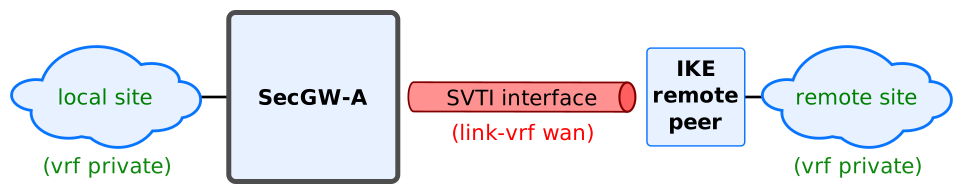
To proceed, configure the SVTI interface in the VRF of original packets, specify a link-VRF equal to the VRF of encapsulated packets.
vsr running config# / vrf private interface svti svtix666 svti-id 666
vsr running config# / vrf private interface svti svtix666 link-vrf wan
Then configure IKE in the link-VRF and bind it to the SVTI interface via its
svti-id.
vsr running config# / vrf wan ike vpn xsvti-vpn ike-policy template iketemp1
vsr running config#! / vrf wan ike vpn xsvti-vpn ipsec-policy template ipsectemp1
vsr running config# / vrf wan ike vpn xsvti-vpn security-policy xsvti-tunnel svti-id-in 666
vsr running config# / vrf wan ike vpn xsvti-vpn security-policy xsvti-tunnel svti-id-out 666
The SVTI interface is uniquely identified by its (svti-id, link-vrf) pair.
Cross-VRF with dynamic SVTI interfaces
Dynamic SVTI interfaces also enable to perform cross-VRF encapsulation. The link-VRF of a dynamic interface is the VRF of the VPN that triggered its creation.
To proceed, configure the SVTI template in the VRF of original packets.
vsr running config# / vrf private interface svti-template svtixtemp100 mtu 1300
Then create a VPN in the link-VRF and bind it to the SVTI template, by specifying its name and VRF.
vsr running config# / vrf wan ike vpn xdynsvti-vpn ike-policy template iketemp1
vsr running config#! / vrf wan ike vpn xdynsvti-vpn ipsec-policy template ipsectemp1
vsr running config# / vrf wan ike vpn xdynsvti-vpn dynamic-svti svti-template svtixtemp100
vsr running config#! / vrf wan ike vpn xdynsvti-vpn dynamic-svti svti-template svtixtemp100 vrf private
Note
If a VPN in VRF wan specifies an SVTI template, then no static SVTI
must be configured with its link VRF in wan.
Route-based VPNs through GRE interfaces
Security policies can be configured to select the traffic encapsulated by a GRE tunnel, by matching the IP addresses and protocol (47) of the GRE tunnel. The IPsec encapsulation is typically performed in transport mode.
Traffic routed through these GRE tunnels is GRE-encapsulated and the GRE packet is itself IPsec-encrypted.
It is therefore possible to perform route-based VPNs by creating GRE interfaces and configure IKE so that it protects the GRE-encapsulated traffic. Plain text packets routed to or received from such a GRE interface are protected without the need for individual security policies, and routing protocols may be run on these interfaces.
Static GRE interfaces
To encrypt a GRE tunnel via IPsec, create a VPN between the GRE tunnel endpoint addresses and specify protocol GRE (47) in the security-policy traffic selectors:
Create GRE interface gre100:
vsr running config# / vrf main interface gre gre100 local 10.125.0.1
vsr running config# / vrf main interface gre gre100 remote 10.175.0.2
Create IKE VPN gre-vpn, with a security policy that matches the gre100
tunnel addresses and protocol:
vsr running config# / vrf main ike vpn gre-vpn ike-policy template iketemp1
vsr running config#! / vrf main ike vpn gre-vpn ipsec-policy template ipsectemp1
vsr running config# / vrf main ike vpn gre-vpn local-address 10.125.0.1
vsr running config# / vrf main ike vpn gre-vpn remote-address 10.175.0.2
vsr running config# / vrf main ike vpn gre-vpn security-policy gretunnel local-ts protocol 47
vsr running config# / vrf main ike vpn gre-vpn security-policy gretunnel mode transport
The protocol may be specified in the local-ts or the remote-ts.
Note
Since the security policy addresses are those of the IKE peers, the
subnet argument of local-ts and remote-ts may be ommitted. However
it is possible to explicitly specify them:
vsr running config# / vrf main ike vpn gre-vpn security-policy gretunnel local-ts subnet 10.125.0.1 protocol 47
vsr running config# / vrf main ike vpn gre-vpn security-policy gretunnel remote-ts subnet 10.175.0.2
All traffic routed through the GRE interface will be GRE-encapsulated then IPsec-encrypted:
vsr running config# / vrf main routing static ipv4-route 10.200.0.0/24 next-hop gre100
Dynamic GRE interfaces
GRE interfaces may be dynamically created and protected by the IKE SAs as they are established.
This feature relies on GRE templates and remote peer PSK authentication via RADIUS.
First create a GRE interface template in the same VRF as IKE:
vsr running config# / vrf main interface gre-template gretemp1 mtu 1300
vsr running config# / vrf main interface gre-template gretemp1 install-routes-to none
Then bind a vpn to the gre-template by specifying its name under
dynamic-gre:
vsr running config# / vrf main ike vpn dyngre-vpn ike-policy template iketemp1
vsr running config#! / vrf main ike vpn dyngre-vpn ipsec-policy template ipsectemp1
vsr running config# / vrf main ike vpn dyngre-vpn dynamic-gre template gretemp1
Finally configure remote peer PSK authentication via RADIUS as described in Remote peer authentication by PSK via RADIUS:
vsr running config# / vrf main ike psk-radius server server-tnr address 10.200.0.1
vsr running config#! / vrf main ike psk-radius server server-tnr secret testing123
vsr running config#! / vrf main ike psk-radius password GlobalUserPassword
Note
When committing a configuration change in which dynamic-gre is added to or
removed from some VPNs, all IKE SAs related to these VPNs will be
terminated as though the VPN had been disabled and subsequently reenabled.
Edits within the dynamic-gre configuration do not trigger this behavior but
are only applied to interfaces created after the new configuration has been
committed. Any existing interfaces will remain as configured until all SAs
using them are terminated, including SAs established after the
configuration change.
The GRE tunnel encapsulation addresses are those of the negotiated IKE SA.
The VPN security policy should match the GRE-encapsulated traffic, so that the GRE encapsulation traffic is IPsec-encrypted:
vsr running config# / vrf main ike vpn dyngre-vpn security-policy dyngretunnel local-ts protocol 47
vsr running config# / vrf main ike vpn dyngre-vpn security-policy dyngretunnel mode transport
These GRE tunnels can also perform cross-VRF encapsulation. The VRF of the
GRE interface (i.e. the VRF of packets before encapsulation or after
decapsulation) is the VRF under which the gre-template is configured. The
link-VRF of the GRE interface (i.e. the VRF of encapsulated packets) is the
VRF under which GRE tunneling is configured (the VRF from which the GRE
template is referenced).
To proceed, configure the GRE template in the VRF of plaintext packets:
vsr running config# / vrf private interface gre-template gretemp2 mtu 1300
vsr running config# / vrf private interface gre-template gretemp2 install-routes-to none
Then bind a vpn in the link-VRF to the gre-template, by specifying its VRF
and name under dynamic-gre:
vsr running config# / vrf wan ike vpn xdyngre-vpn ike-policy template iketemp1
vsr running config#! / vrf wan ike vpn xdyngre-vpn ipsec-policy template ipsectemp1
vsr running config# / vrf wan ike vpn xdyngre-vpn dynamic-gre template gretemp2
vsr running config#! / vrf wan ike vpn xdyngre-vpn dynamic-gre vrf private
The names of the GRE interfaces created through this functionality are
composed of a dgreike prefix followed by random ASCII characters. If all
such names are assigned to interfaces, the creation of the tunnel will fail.
Additional supported RADIUS attributes
Additional behavior can be specified via RADIUS attributes:
Framed-Route and Framed-IPv6-Route can be used to specify IPv4 and IPv6 routes to direct through the GRE interface.
l3vrf can be used to specify an L3VRF to which the GRE interface should be attached.
ip-address can be used to assign IP addresses to the GRE interface.
ike:internal-ip-subnet can be used to specify IP addresses that should be communicated to the IKE peer via the
INTERNAL_IP_SUBNETandINTERNAL_IP6_SUBNETIKE attributes.
See also
Configuring QoS on dynamic GRE interfaces
The gre-template may define a list of QoS templates to apply to dynamically created GRE interfaces. The QoS template to apply to a given interface is specified by the qos:egress-template 6WIND vendor RADIUS attribute. A default QoS template may also be specified in the configuration. It will be applied to the interface if the RADIUS attribute is not set or if the requested QoS template is not found.
Each QoS template references QoS objects (shapers, schedulers) defined in
the / qos context, in a similar way as QoS is configured on a manually
configured interface.
vsr running config# / vrf private interface gre-template gretemp2 qos egress template GOLD-1G scheduler sched-HTB
vsr running config# / vrf private interface gre-template gretemp2 qos egress template SILVER-1000K rate-limit shaper shaper-1000K
vsr running config# / vrf private interface gre-template gretemp2 qos egress template SILVER-1000K scheduler sched-PQ
vsr running config# / vrf private interface gre-template gretemp2 qos egress template SILVER-256K rate-limit shaper shaper-256K
vsr running config# / vrf private interface gre-template gretemp2 qos egress template SILVER-256K scheduler sched-PQ
vsr running config# / vrf private interface gre-template gretemp2 qos egress template BRONZE-256K rate-limit shaper shaper-256K
vsr running config# / vrf private interface gre-template gretemp2 qos egress template BRONZE-256K scheduler sched-DWRR
vsr running config# / vrf private interface gre-template gretemp2 qos egress template SHAPE-256K rate-limit shaper shaper-256K
vsr running config# / vrf private interface gre-template gretemp2 qos egress template NO_QOS
vsr running template NO_QOS# / vrf private interface gre-template gretemp2 qos egress default-template SHAPE-256K
Let us assume a GRE interface is dynamically created from the gre-template
gretemp2.
Depending on the value of the qos:egress-template
6WIND-AVPair attribute in the RADIUS response during the authentication
phase, the following QoS template will be applied:
no
qos:egress-templateattribute: the default QoS templateSHAPE-256Kwill be applied,qos:egress-template=SILVER-1000K: the requested QoS templateSILVER-1000Kwill be applied,qos:egress-template=TITANIUM-2G: the default QoS templateSHAPE-256Kwill be applied, because the requested template does not exist,qos:egress-template=NO_QOS: the requested QoS templateNO_QOSwill be applied, which implies that no QoS will be applied.
A FreeRADIUS configuration example
Using PSK RADIUS authentication requires that the RADIUS server be configured to send 6WIND vendor attributes. How this can be done will depend on the RADIUS implementation, but an example using the FreeRADIUS implementation is provided here.
A dictionary will be necessary for FreeRADIUS to recognize and use 6WIND vendor attributes. Here is the complete 6WIND vendor dictionary for FreeRADIUS:
VENDOR 6WIND 7336
BEGIN-VENDOR 6WIND
ATTRIBUTE 6WIND-AVPair 1 string
END-VENDOR 6WIND
You may then create users and configure the attributes for each. Here is how a user making use of PSK authentication via RADIUS might be configured for FreeRADIUS:
user1@example.com   Cleartext-Password := "GlobalUserPassword"
   Framed-IP-Address = 10.0.0.1,
   6WIND-AVPair = "ike:psk-remote=user1psk",
   # Attributes for the GRE extension
   Framed-Route = "10.0.0.0/24",
   6WIND-AVPair = "l3vrf=user1_l3vrf",
   6WIND-AVPair = "ip-address=10.0.0.43",
   6WIND-AVPair = "ike:internal-ip-subnet=10.0.0.43/32",
   6WIND-AVPair = "qos:egress-template=SILVER-1000K"
See also
See also
The command reference.